Most dogs don't need a whole winter wardrobe. They need the one thing that fixes their problem: boots or wax for salted sidewalks, wax or a trim for snowballs between the toes, and a coat only for the dogs who actually get cold.
Match the fix to what you see on your walks. Most owners need one row, not all of them.
| What you notice | Most likely cause | Best fix | Good to add |
|---|---|---|---|
| Licking or chewing paws after walks | Salt or de-icer residue drying the pads | Rinse or wipe paws at the door | Paw wax before the walk, or boots |
| Limping or lifting paws on the sidewalk | Salt crystals, cold pavement, or grit stinging the pads | Boots | Paw wax for dogs who refuse boots |
| Ice balls stuck between the toes | Long fur between the pads collecting snow | Trim the fur between the pads | Paw wax so snow slides off |
| Shivering, hunching, or wanting to turn back | Thin coat or small body losing heat | Winter coat | Shorter, more frequent walks |
| Dry, cracked pads | Cold, dry air plus salt | Paw wax or balm on clean, dry pads | Boots on salted routes |
Size by paw width, not weight, and let your dog practice indoors for a few short sessions before the first real walk. Prices move, so we don't quote them here.

Rugged non-slip soles and reflective straps, sized by paw width. Owners say they protect paws and are easy to put on. Watch for: fit is the common complaint, so measure carefully.
View on Amazon → Lightest feel
Thin natural-rubber booties, so your dog still feels the ground. Owners like them for ice, snow, and salt. Watch for: they can tear, and getting them on is often a two-person job at first.
View on Amazon →
An all-natural wax barrier you rub into the pads before a walk. Owners say a little goes a long way on snow, ice, and salt melt. Watch for: it is a barrier, not a boot, so still rinse paws after salty walks.
View on Amazon → Salt rinse at the door
Add water, dip the paw, twist, dry. Owners say it gets grit off and most dogs tolerate it. Watch for: buy the size that matches your dog's paw width.
View on Amazon → For your own steps
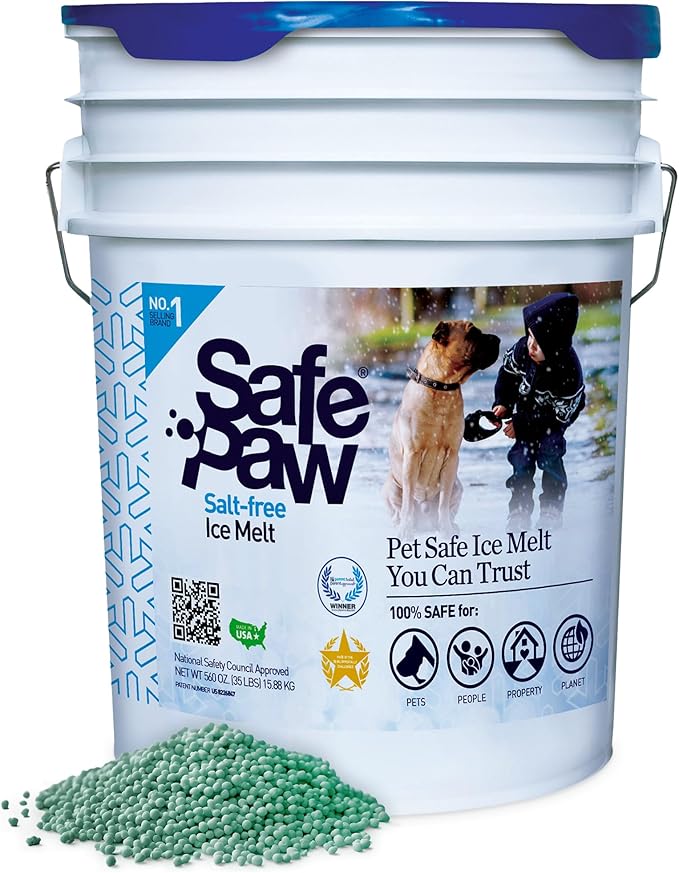
Salt- and chloride-free, with grit for traction. Owners like that it doesn't bother paws. Watch for: melting speed is mixed, and it costs more than rock salt.
View on Amazon →Thick double coats (Huskies, Akitas, Malamutes) rarely need one. Small dogs, short coats, puppies, and seniors often do.

Waterproof shell, double fleece lining, leash hole, seven sizes. Owners say it keeps dogs warm and dry in light rain. Watch for: sizing runs both ways and the velcro can loosen.
View on Amazon → Best for harness wearers
Light insulated jacket with a zipper opening for your harness and reflective trim. Owners say it keeps dogs warm on chilly walks. Watch for: some find the medium runs big.
View on Amazon → Coat and harness in one
Fleece-lined, water-resistant coat with a harness and D-rings built in. Owners like the warmth and the easy on and off. Watch for: it runs small for some dogs.
View on Amazon →Have your dog stand on paper, mark both sides of the front paw, and measure the width. Front paws are usually a little wider than back paws.
Put one boot on, give a treat, take it off. Build up over a few days. The high-stepping walk at first is normal and fades.
Boots or not, wipe or rinse paws after any salted walk, then dry between the toes. More in our winter paw care guide.
Not all of them. Boots matter most on city sidewalks treated with rock salt or chemical de-icer, for dogs who limp or lift their paws on cold pavement, and for long snowy hikes. On a short walk in clean snow, paw wax and a rinse afterward is often enough.
It can be. Rock salt and many de-icers dry and crack paw pads and sting small cuts, and dogs can swallow it when they lick their feet. Rinse or wipe paws after every salted walk, and use a salt-free, chloride-free melter on your own steps.
Measure the width of the front paw while your dog stands with weight on it, and use the brand's chart. Weight charts are only a rough guide. If your dog is between sizes, the smaller one usually stays on better.
Thick double-coated breeds like Huskies, Akitas, and Malamutes rarely do. Small dogs, short-coated breeds like Greyhounds and Boxers, puppies, and seniors often stay warmer and walk longer with one.
Gear helps, but it doesn't replace common sense on very cold days: shorter walks, staying moving, and heading home when your dog asks. Cracked pads that bleed, limping that lasts after the walk, or pale, hard, or very painful skin on the paws or ears are a vet visit, not a balm problem. For the full routine, read how to protect your dog's paws in winter. If your dog pulls hard on icy sidewalks, our leash pulling guide and harness comparison help keep you both upright.