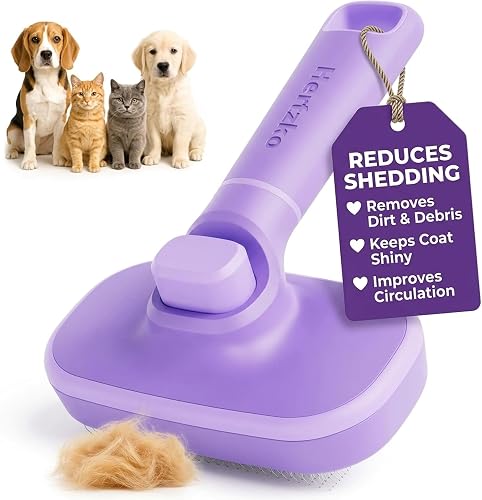
Deshedding tool comparison

Best Dog Deshedding Tools for Heavy Shedders: match the tool to the coat.
The right deshedder depends on your dog’s coat. A dense double coat, a fine tangly coat, and a curly doodle coat each need a different tool. Pick the wrong one and it either does nothing or scrapes the skin.

Disclosure: Club Hachiko may earn from qualifying purchases. Choose based on your dog’s coat type, size, and skin sensitivity.

First, know your dog’s coat

Matching the tool to the coat is the whole game. Here is the quick version before you compare tools.

Dense double coat

Labs, Huskies, Goldens, Shepherds. Loose undercoat is the problem, so you need a rake or deshedding blade that reaches below the topcoat.

Fine or tangly coat

Mats and surface hair matter more than deep undercoat. A slicker brush detangles and lifts loose hair without digging into skin.

Curly or doodle coat

Curls tear if you use the wrong pins. A quality slicker with flexible pins works the coat without ripping it. If shedding is really about skin and diet, our shedding guide covers that side.

Decision lens

What actually makes one deshedding tool better than another?

Skip the marketing. These are the things that decide whether a tool works for your dog and whether you keep using it. If your dog is a known heavy shedder, our double-coated breeds guide explains why.

CriterionWhy it mattersWhat the better tools do
Coat matchA blade on a fine coat scrapes; a slicker on a dense coat barely touches the undercoat.They are honest about which coat they are built for.
Skin safetyToo aggressive and you cause razor burn or irritation.Rounded or flexible tips glide instead of gouging.
Fur releaseStopping every 20 seconds to pick fur out kills the routine.A button or self-clean head ejects collected fur fast.
Grip comfortDeshedding a big dog is a workout; a bad handle ends the session early.Comfortable, non-slip handles you can hold for ten minutes.
Review friction“Customers say” reveals what the box hides.Fewer repeat complaints about nicking skin, shedding pins, or flimsy builds.
Recommended tools

Start with the fit, then check the coat

Pick the tool that matches your dog’s coat from the section above. Then confirm the size, current price, and reviews before you commit. Prices move, so we don’t quote them here.

Use it well

Get more fur out without upsetting your dog

Brush a calm, dry coat

Deshedding works best on a clean, dry, tangle-free coat. Work mats out gently first, because raking a mat hurts.

Short, light passes

Let the tool do the work in the direction of hair growth. Pressing harder does not remove more fur; it just irritates skin.

Support the coat from inside

Heavy shedding is partly skin and diet. A healthy coat sheds less, so see whether fish oil fits your dog.

Before you buy

A calm, honest note

The right tool removes loose fur and makes grooming calmer, but it is not a fix for a skin problem. If your dog’s shedding comes with itching, bald patches, redness, or sore skin, that is a reason to see your vet, not to brush harder. Start slow, keep sessions short and positive, and let your dog set the pace. When you want the diet-and-skin side, the shedding guide and seasonal allergies guide will help. For technique, see how to brush your dog by coat type.